
- Home
- Thermal Fluid Line & Insulation
Thermal Fluid Line & Insulation
Descriptions
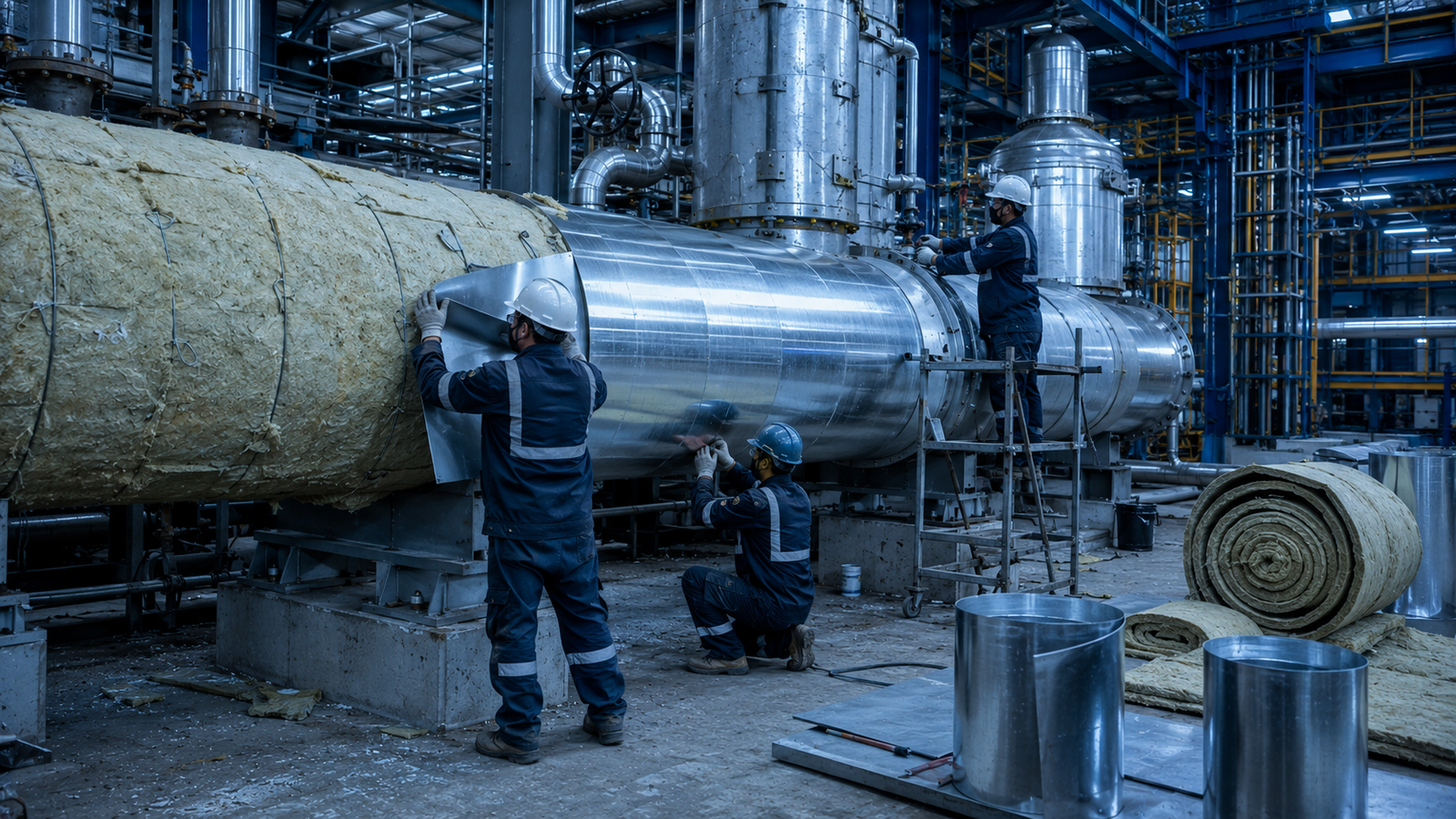
Fabco Engineers insulates boilers, pressure vessels and piping networks to reduce energy loss and protect personnel from hot surfaces across your plant.
Complete Thermal Fluid Line & Insulation Process
Our team applies insulation and weatherproof cladding using industry standard materials suited to each application, from high temperature steam lines to chilled water piping.
- Boiler and vessel insulation
- Steam line lagging
- Condensate line lagging
- Hot and cold service insulation
- Aluminium cladding installation
- GI sheet cladding
- Weatherproof sealing
- Finished surface detailing
- Mineral wool insulation
- Rockwool and calcium silicate
- Personnel protection focus
- Energy loss reduction
Other Services
Get a free quote?
Why Choose us
Your Trusted Partner For Thermal Fluid Line & Insulation
We use mineral wool, rockwool and calcium silicate insulation suited to each temperature and application.
We insulate high temperature steam lines as well as chilled water and cold service piping.
From insulation to weatherproof cladding, we manage the complete scope in house.
Three decades of hands on thermal fluid line and insulation experience across Bangalore and South India.
Common Questions
Common Questions About Thermal Fluid Line & Insulation
Fabco Engineers insulates boilers, steam lines, valves, tanks and process equipment for factories across Karnataka. Hot insulation, cold insulation, removable jackets and cladding.
As thermal fluid line and insulation contractors Bangalore plants call in, we are usually asked to fix something rather than start fresh. The typical site has lagging on the straight runs, nothing on the fittings, and a fuel bill nobody has connected to the two.
What poor insulation actually costs
Heat loss from bare or badly lagged surfaces is continuous, invisible and entirely avoidable. A single uninsulated DN100 valve on a steam line can waste more energy in a year than most managers would guess. Multiply that by the number of unlagged flanges, valves and fittings in a working plant and the annual figure becomes serious.
Beyond fuel there are three further costs. Surface temperatures on unlagged pipework are a genuine burn risk where people work. Radiated heat raises ambient temperature in enclosed areas, which is miserable for operators and adds to any cooling load. And uninsulated lines lose pressure and temperature along their length, so equipment at the far end underperforms.
We survey, measure surface temperatures, calculate annual loss and give you a figure in rupees per year. That makes the decision straightforward rather than a matter of judgement.
Hot insulation
For boilers, steam mains, headers, valves, flanges, condensate lines, flue ducts and hot process vessels, we apply mineral wool, ceramic fibre, calcium silicate or glass wool according to service temperature, with aluminium or galvanised sheet cladding.
Thickness is calculated, not guessed. Economic thickness balances material cost against the fuel it saves, and personnel protection thickness ensures the surface stays safe to touch. These give different answers and we tell you which we have applied.
Cold insulation
For chilled water, refrigeration, brine and cold process lines, the priority is preventing condensation as much as retaining temperature. That means a continuous vapour barrier, because moisture reaching a cold surface inside the insulation causes corrosion that is invisible until it is severe.
We use closed cell materials with properly sealed joints and vapour barriers taken through supports rather than interrupted at them. Interrupted vapour barriers are the most common cold insulation defect we find.
Removable insulation jackets
Valves, flanges, strainers and instruments need periodic access. Where these are permanently clad, maintenance teams cut the insulation off and rarely replace it properly, so those points end up permanently bare.
Removable jackets solve this. They are fabricated to fit the specific fitting, secured with straps or fasteners and can be taken off in a minute and refitted just as fast. On plants with frequent valve maintenance they pay for themselves quickly through insulation that is actually in place.
Cladding and finish
Cladding protects insulation from weather, mechanical damage and moisture ingress. Aluminium is light and adequate indoors. Galvanised or stainless steel suits outdoor, washdown and food environments where hygiene and durability matter more.
Detailing is what separates cladding that lasts from cladding that fails. Overlaps facing the right way, sealed penetrations, proper terminations at supports and drainage that sheds water rather than trapping it. Water inside insulation destroys its performance and corrodes the pipe underneath.
Corrosion under insulation
This deserves separate attention because it causes failures that arrive without warning. Moisture trapped against a warm carbon steel surface corrodes it steadily, hidden from view. Lines can lose significant wall thickness before anything is visible externally.
As thermal fluid line and insulation contractors Bangalore facilities use for surveys, we open representative points on older installations to establish the condition underneath. On plant that has not been inspected in a decade this is inexpensive relative to what it can reveal.
Choosing materials for the actual service
Experienced thermal fluid line and insulation contractors Bangalore plants rely on will specify carefully here. Insulation material is chosen for temperature, environment and what is around it, not for whatever is in stock. Mineral wool covers most steam and hot water duties economically. Calcium silicate handles higher temperatures and resists mechanical abuse where people walk or lean on lines. Ceramic fibre goes where flue gas temperatures rule everything else out. Closed cell elastomeric and polyurethane suit cold work where vapour resistance is the priority.
Food environments narrow the choice further. Materials that shed fibres are unacceptable above open product, and finishes have to survive washdown chemicals without degrading. Pharmaceutical plants add cleanroom compatibility to the list. We specify to those constraints rather than treating every plant the same.
Fire behaviour matters too. Insulation runs through the whole building, and materials that contribute to fire spread are a poor economy. Non combustible materials in the main runs are worth the difference.
Survey and payback reporting
Our survey covers surface temperature measurement across the plant, identification of uninsulated and damaged areas, annual heat loss and fuel cost quantification, insulation condition and moisture ingress, and safety risks from hot surfaces.
The report lists items by payback period so you can act on the best returns first. Frequently the highest return items are valves and flanges that were skipped originally, and they are among the cheapest to address.
Maintenance, damage and keeping it working
Insulation is not permanent. Cladding gets dented by forklifts and ladders, jackets go missing after maintenance, and weather finds any gap outdoors. A system installed well and never inspected drifts back toward losing money within a few years.
We include insulation condition in AMC coverage, repairing damaged cladding, replacing wet or compressed material and refitting removable jackets that have gone astray. Photographing bare or damaged areas during routine visits gives a clear record of where the losses are.
Where a plant has been left a long time, the practical route is usually staged. Address valves, flanges and the hottest bare runs first for immediate return, then work down the list over subsequent quarters rather than trying to fund everything at once. Good thermal fluid line and insulation contractors Bangalore facilities keep on retainer will help you phase that sensibly instead of quoting one large number.
Who we work for
Parle, Althera, Cothas Coffee, Akshaya Patra, Micro Labs, VH Group, Arvind Fashions, Pioneer Laundry and Swastiks. Food and pharmaceutical plants require cleanable finishes and materials that will not shed fibres, and we specify accordingly.
Site work and shutdowns
Most insulation work happens on live plant. We work around production, insulate hot lines in service where it is safe, and schedule anything requiring shutdown into your planned windows. Housekeeping matters in food environments and our crews work to that standard.
Discussing your requirement
Whether you have a new installation to insulate or an existing plant losing money quietly, start with a survey. For thermal fluid line and insulation contractors Bangalore manufacturers can hold to a measurable result, call Fabco Engineers or send your requirement through the enquiry form.